
Bristol's water recycling centre
More than £100 million is being invested to extend the site in Avonmouth, allowing us to meet the demands of a rapidly expanding city.
Our huge investment will allow a greater volume of sewage to be treated to the highest standard, while also protecting the environment by improving the quality of treated wastewater released into the Severn Estuary.
Why is this expansion needed?
Bristol’s water recycling centre treats sewage and wastewater from the city and the surrounding area, but with the city’s population projected to increase significantly in the next 20 years, further capacity is needed to meet these demands.
This increased treatment capacity will also play a role in reducing the automatic operation of storm overflows when rapidly increasing flows caused by sudden heavy storms can overwhelm the sewer system.
An essential component of the city’s vision to put good social and environmental outcomes at the core of sustainable economic growth, expanding the existing site is also likely to offer further benefits to the city through associated economic opportunities as its construction begins.
Overall, the expansion project is expected to take five years to complete.
Construction progress
The project to expand the water recycling centre at Avonmouth got underway in January 2024, with the opening six months concentrating on contractors Envolve preparing the site of the expansion for the installation of site infrastructure.
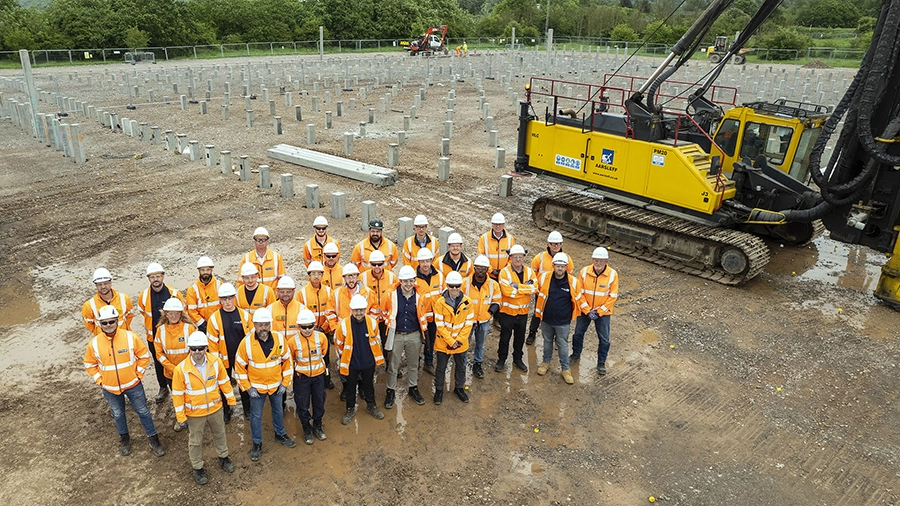
Despite 2024 being one of the wettest winters on record, thousands of tonnes of earth were excavated and moved, and materials were laid down at the expansion area.
More than 3,700 concrete piles were driven into the ground as foundations for the new equipment - such as the treatment tanks and pipework - were built.
If laid end to end, these piles would stretch 74 kilometres – or from the Avonmouth site to the outskirts of Hereford in the north, Salisbury in the east, Port Talbot in the west or into Dorset in the south.
Through the second half of 2024, significant progress was made to get much of the site’s infrastructure in place.
This included a record-breaking concrete pour in the autumn, which saw more than 3,600 tonnes (1,509 cubic metres) laid across an 18-hour period – the largest continuous Wessex Water concrete pour to date – beating the previous record set at our £50 million refurbishment of Durleigh Water Treatment Centre in Somerset.
In excess of £260,000 worth of concrete, within 200 loads and using three pumps, was part of what providers Wrights estimated was the largest continuous pour in Bristol.
More than 3,363 tonnes of reinforcement were also put in place as structures including the sequential batch reactors – part of the enhanced treatment process – started to take shape.
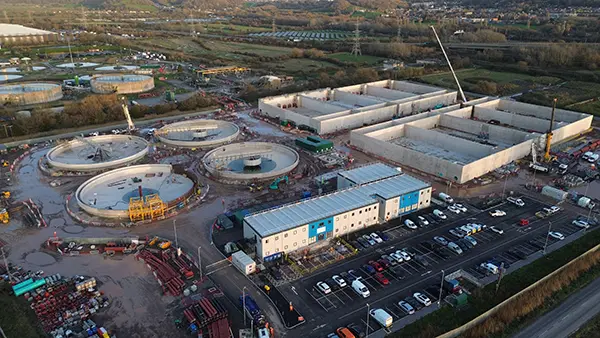
The structures that form the centrepiece of the expansion have taken shape on site, with three 42-meter diameter Primary Settlement Tanks (PST) structures – a vital part of the treatment process – complete and the last one being finished this month.
Eight Sequencing Batch Reactors (SBR) - another key treatment process - were complete by Christmas, with the mechanical access steelwork on them now under way and two motor control centres (MCCs), designed and manufactured offsite, were delivered and installed.
Around 51,000 tonnes of concrete and 25,000 tonnes of steelwork have been used as part of the expansion so far - that's just under half of what was used at the world's tallest building, the Burj Khalifa in Dubai!
Preparing for the future
To support the project and site teams deliver this massive and complex five-year expansion, a temporary office and parking area were constructed within the temporary access and exit onto Kings Weston Lane.
These offices allow Wessex Water and its sister company, YTL Construction – which is completing the project - to maintain a long-term presence in Avonmouth, while also supporting the economic, skills and sustainability opportunities created by the expansion.
What else are we doing?
Since the end of 2024, our Ecology team has been overseeing progress on some of the Biodiversity Net Gain (BNG) targets outlined as part of the expansion project, to make sure the development has a measurably positive impact on local biodiversity.
One phase of work has seen orchard planting take place to the north-east of the expansion site, where dense bramble scrub was removed and topsoil imported from elsewhere within the water recycling centre as YTL Infrastructure helped to prepare the ground during the winter.
Planting and seeding of different varieties of apple trees took place in March and May respectively, to specifications within the expansion’s Landscape and Ecological Management Plan (LEMP).
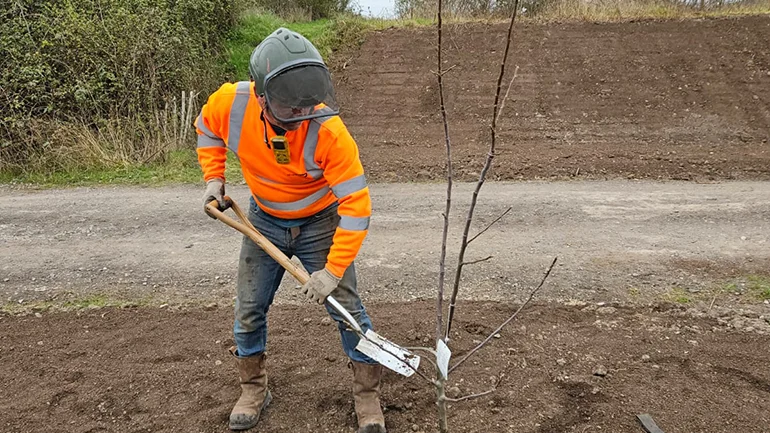
The orchard will help provide foraging and nesting sites for birds, as well as improving the appearance of the site next to the public right of way, which runs around the perimeter of the water recycling centre.
Other work in the area will include creating a reedbed, planting mixed scrub and lines of trees and hedgerows, enhancing ditches, and replacing bird boxes, including a barn owl box.
Find out more about how we’re revitalising these overgrown, underused areas – and the other environmental and ecological measures planned as part of the expansion.
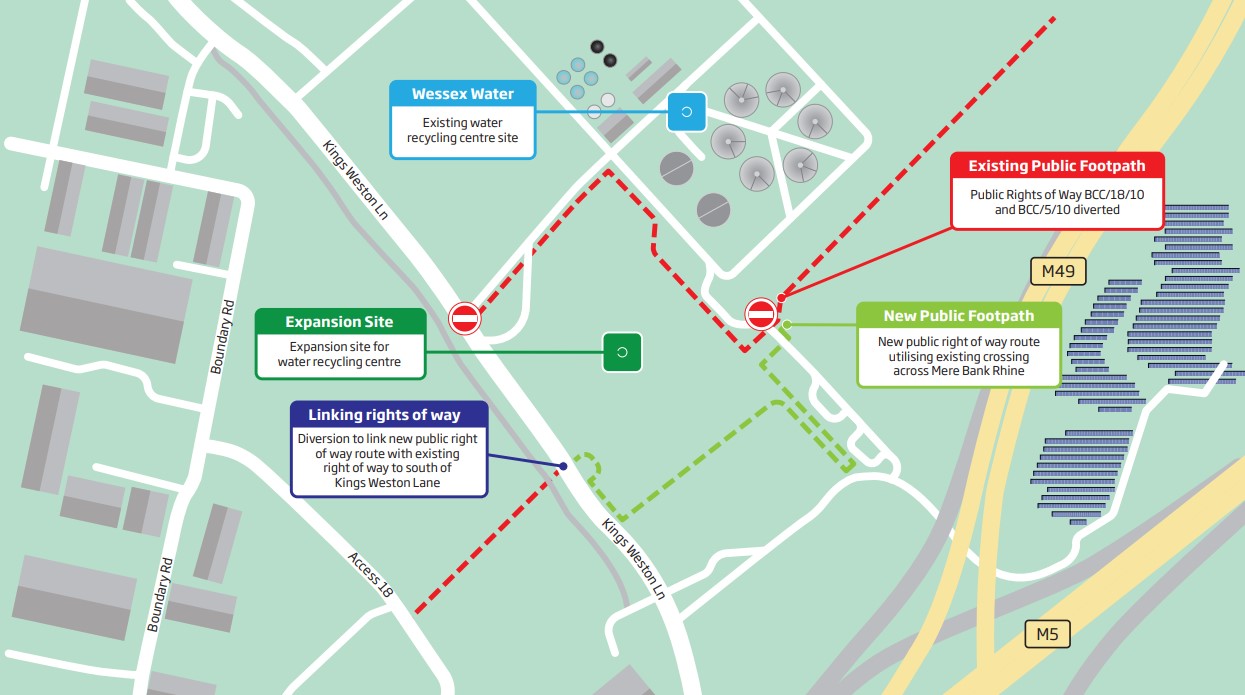
During our consultations, you also made clear your support for our proposals to revitalise and improve footpaths adjacent to the water recycling centre.
The opening stages of that work have taken place in the early part of 2025 by diverting two local rights of way (BCC/18/10 and BCC/5/10) while we continue the expansion.
The diverted footpath joins the existing right-of-way network, allowing users a safer, more pleasant and accessible route to view the newly established ditch next to the site, which provides a habitat for reed bunting birds.
Preserving history
The public consultation process prior to the expansion underlined that many local people wanted to see more information about the local archaeology around the water recycling centre.
We have already carried out substantial investigations into the local heritage, particularly the Mere Bank Scheduled Monument, with Historic England and Bristol City Council’s archaeologist advising on the design and survey requirements throughout.
Read more about the Mere Bank Scheduled Monument Investigations.
Working with the community
The Avonmouth Area Community Fund will open for applications for its third and final round this summer.
Supported by the YTL Wessex Foundation, the fund is run in partnership with the Quartet Community Foundation to support local community projects in the Avonmouth and Lawrence Weston ward.
Grants are awarded to sustain existing or new projects and activities, prioritising those working with young people, focusing on the health and wellbeing of the local community and improving access to skills and training.
Last September a second round of grants totalling £35,000 were awarded to groups including £5,000 to the Happy Days Hub, run by Bristol Dementia Action Alliance (BDAA) in Lawrence Weston.
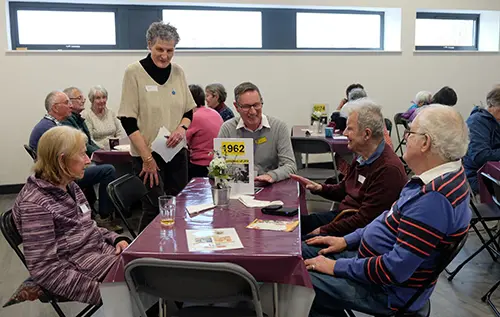
Sam Rock, from the BDAA, said: “This funding will help us make a real difference to the lives of those affected by dementia in the Avonmouth area.
“Our Happy Days Hub – a dementia and ageing well resource in Lawrence Weston provides a community café offering refreshments, information and resources.
“We run activity groups including two memory cafes and a dementia carers support group each month, along with ad-hoc advice sessions and specific activities.”
Applications for the third round open on 29 June and close on 20 July 2026. See the Avonmouth Area Community Fund for more details.
How to stay informed
As well as updating this page, we’re keeping customers and stakeholders informed via a project newsletter.
Subscribe to the newsletter to receive updates about the expansion and other information every few months.
If you have any further questions about this scheme, please email avonmouth.scheme@wessexwater.co.uk
First Published 15 March 2023
Last Updated 23 January 2026